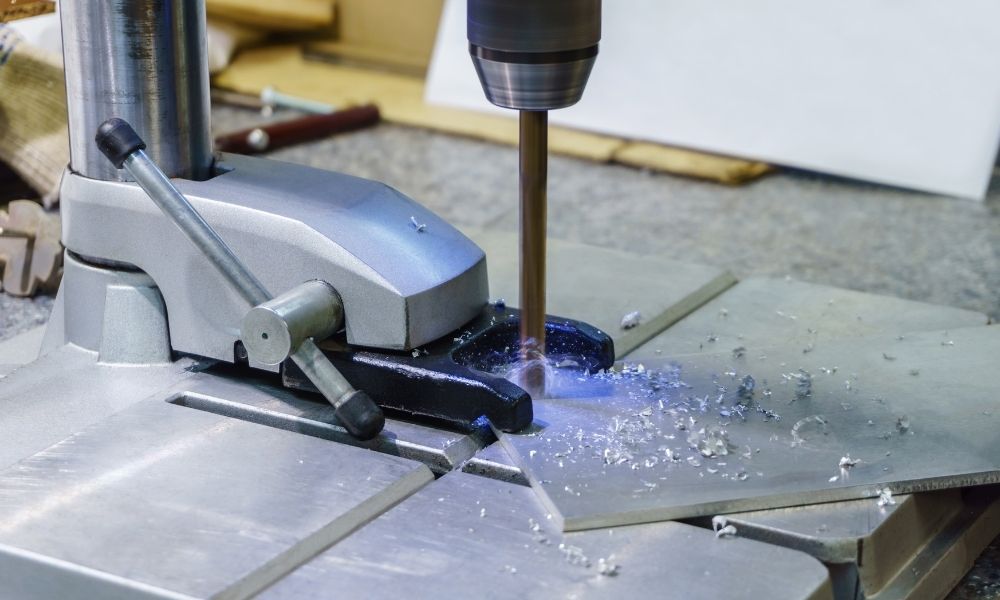
If you’re a DIY enthusiast, then you’ve probably found yourself in a predicament when it comes to choosing the right tool for your project. In the world of drilling, the debate between a drill press and a hand drill is a common one. Both tools have their strengths and weaknesses, but what really sets them apart is their power. When it comes to raw power, a drill press certainly takes the lead. With its powerful motor and solid structure, a drill press is capable of delivering consistent and precise drilling power that may be hard to match with a hand drill. But, let’s not dismiss the hand drill just yet! While it may not be as mighty as a drill press, a hand drill still packs a punch when it comes to versatility and portability. So, if you’re looking for sheer power, a drill press might be your best bet. But if you value convenience and flexibility, a hand drill may just be the tool for you. So, grab your hard hat and let’s explore the power struggle between a drill press and a hand drill!
Introduction
If you’ve ever taken on a DIY project, you know that having the right tools can make all the difference. When it comes to drilling, you may find yourself contemplating between a drill press and a hand drill. Both tools have their pros and cons, but in this article, we’ll be exploring whether a drill press is more powerful than a hand drill. We’ll delve into various aspects such as accuracy and precision, speed and efficiency, workpiece compatibility, versatility and flexibility, power and torque, safety features, portability and size, as well as price and investment. By the end, you’ll have a comprehensive understanding to help you make an informed decision.
Accuracy and Precision
Comparing Accuracy
When it comes to accuracy, a drill press takes the lead. With its sturdy construction and fixed position, a drill press provides stability, minimizing the chances of wobbling or deviation from your intended drilling point. You can set the depth and angle precisely, ensuring consistent and accurate holes every time. On the other hand, a hand drill relies heavily on your skill and consistency in maintaining a steady hand. While hand drills can be accurate with practice, they are more prone to human error.
Examining Precision
In terms of precision, a drill press also has the upper hand. The ability to adjust the drilling speed and control the pressure applied gives you greater control over the process, resulting in precise holes according to your specifications. A hand drill, while still capable of drilling precise holes, may require more finesse and attention to detail to achieve the same level of precision.
Factors Influencing Accuracy and Precision
Accuracy and precision can be influenced by various factors. The quality and sharpness of the drill bits used play a significant role in achieving accurate and precise holes. Investing in high-quality drill bits designed for specific materials can greatly enhance the performance of both a drill press and a hand drill. Additionally, proper maintenance and regular cleaning of your tools are essential to ensure smooth and precise drilling.
Speed and Efficiency
Exploring Speed
When it comes to speed, a hand drill tends to have an advantage. Hand drills provide more flexibility in terms of quickly moving from one drilling location to another. They are lightweight and easy to maneuver, allowing for faster drilling times. On the other hand, a drill press, with its fixed position, requires you to reposition your workpiece whenever you need to drill in a different spot.
Efficiency of Work
While a hand drill may have the upper hand in terms of speed, a drill press offers greater efficiency in handling larger or more complex projects. The stability and control provided by a drill press allow you to tackle heavy-duty tasks with ease. A hand drill may struggle to handle the same workload, requiring more effort and potentially compromising the quality of your work.
Workpiece Compatibility
Understanding Compatibility
The compatibility of a drill press and a hand drill with various workpieces can vary. A drill press is generally better equipped to handle larger workpieces, such as thick wooden boards or metal sheets. The fixed position and adjustable table make it easier to secure and work with bulkier materials. On the other hand, a hand drill is more versatile in terms of maneuverability, making it suitable for drilling in tight or hard-to-reach spaces.
Drilling Materials
Both a drill press and a hand drill can handle a wide range of materials, including wood, metal, plastics, and more. However, the type and thickness of the material may affect the choice of tool. A drill press, with its greater power and stability, is better suited for drilling through harder materials or thicker surfaces. A hand drill, while capable of drilling through various materials, may require more patience and effort when dealing with tougher materials.
Size and Weight Limitations
Another key factor to consider when determining workpiece compatibility is the size and weight limitations of each tool. A hand drill’s compact size and lightweight design make it ideal for working on smaller projects or for tasks that require mobility. On the other hand, a drill press’s larger size and heavier construction may be less suitable for working in confined spaces or for projects that require frequent movement.
Versatility and Flexibility
Variety of Applications
Versatility is an important consideration when choosing between a drill press and a hand drill. A hand drill offers greater flexibility in terms of the range of applications it can handle. From simple household repairs to intricate woodworking projects, a hand drill can adapt to various tasks. A drill press, while less versatile in terms of mobility, excels in handling repetitive tasks that require precision, such as making multiple holes of the same size and depth.
Multiple Speed Settings
Both a drill press and a hand drill can offer multiple speed settings, but the ease of adjusting the speed may vary. A drill press typically has a more straightforward and convenient speed adjustment mechanism, allowing you to switch between different speeds with ease. Hand drills, while also offering multiple speed options, may require adjusting belts or triggers, which can be more time-consuming.
Multiple Drill Bit Options
Both tools support a wide range of drill bits, but a drill press may offer more options and accessories, especially when it comes to specialized bits for specific applications. The ability to quickly change between different drill bits can enhance the versatility and efficiency of a drill press. However, with proper selection and a variety of drill bit options, a hand drill can still handle most drilling tasks effectively.
Power and Torque
Power Comparison
When comparing power, a drill press generally offers more raw power than a hand drill. This increased power enables a drill press to tackle tougher materials, larger projects, and more demanding drilling tasks with relative ease. The consistent power output of a drill press enhances the efficiency of drilling, minimizing the risk of stalling or slowing down during the process.
Torque Comparison
In terms of torque, both a drill press and a hand drill can generate sufficient torque for most drilling tasks. Torque is crucial for maintaining drilling speed, especially when drilling through harder materials. While a drill press generally has greater torque due to its higher power output, a hand drill can still deliver adequate torque for a wide range of applications. It’s essential to consider the specific torque requirements of your project when choosing between the two tools.
Safety Features
Safety Considerations
Safety is paramount when working with any power tool, and both a drill press and a hand drill come with their own set of safety features. A drill press typically includes safety features such as a safety guard, depth stop, and a lockable on/off switch. These features help minimize the risk of accidents, such as contact with moving parts or unintentional drilling beyond the desired depth. A hand drill often includes safety features such as trigger locks and ergonomic designs to reduce operator fatigue and provide better control.
Protective Measures
In addition to the built-in safety features, using personal protective equipment (PPE) is crucial when operating either tool. Safety goggles, gloves, and hearing protection should be worn to protect against flying debris, potential hand injuries, and loud noise. Following proper drilling techniques, such as applying consistent pressure and maintaining a stable stance, further enhances safety and reduces the risk of accidents.
Portability and Size
Comparing Portability
Portability is an important factor, especially if you anticipate needing to move and work in different locations. A hand drill wins in terms of portability, as it is lightweight, compact, and easy to carry around. You can easily take it with you to various job sites or move freely within your project area. A drill press, due to its larger size and fixed position, is less portable and may require disassembly or a dedicated space to set up.
Dimensions and Space Requirements
The dimensions and space requirements of a drill press and a hand drill can also influence your decision. A drill press typically occupies more space due to its larger size and the need for a stable work surface. Consider the dimensions of your workspace and whether you have adequate room for a drill press. On the other hand, a hand drill’s compact size allows for easy storage and greater flexibility in terms of the workspace required.
Price and Investment
Cost Comparison
When it comes to the cost, a drill press is generally more expensive than a hand drill. The increased power, precision, and stability offered by a drill press contribute to its higher price tag. However, the cost difference may be justified if you regularly undertake large or complex projects that require the enhanced capabilities of a drill press. A hand drill, being more affordable, can be a suitable option for occasional DIY enthusiasts or those with budget constraints.
Long-Term Investment
A key aspect to consider when comparing the price is the long-term investment value. A drill press, with its durability and capabilities, can be seen as a long-term investment for those who frequently engage in drilling tasks. Its robust construction and reliability ensure years of functionality. On the other hand, a hand drill may require replacement or repairs more frequently, making it a better choice for occasional or light-duty use.
Considerations for DIY Enthusiasts
For many DIY enthusiasts, cost-effectiveness, versatility, and ease of use are important factors. A hand drill can often meet these requirements, providing the necessary functionality for various household repairs and small projects. However, as your skills and project complexity grow, a drill press can offer greater precision, efficiency, and power, elevating the quality of your work. Assessing your current needs and future aspirations can help guide your decision and ensure you invest in the right tool for your DIY endeavors.
Overall Verdict
In conclusion, the choice between a drill press and a hand drill depends on your specific needs and preferences. While a drill press offers greater accuracy, precision, power, and stability, a hand drill excels in terms of speed, versatility, portability, and affordability. Consider the type of projects you undertake, the materials you work with, and the desired level of precision and power. Ultimately, investing in the right tool for the job will enhance your DIY experience and help you achieve professional-looking results.