Do you enjoy DIY projects? Are you a fan of delving into the world of metalworking? If so, then you’ve come to the right place! In this article, we will be exploring the fascinating world of metalworking with a drill press. Whether you’re a beginner or a seasoned metalworker, this blog is here to provide you with useful and practical information on how to effectively utilize a drill press in your metalworking projects. So grab your tools and get ready to unleash your creativity in the world of metalworking with a drill press!
This image is property of pixabay.com.
Introduction
What is a drill press?
A drill press, also known as a pillar drill or bench drill, is a versatile tool used in metalworking to create precise holes in various materials. It consists of a motor, chuck, and a vertical spindle that can be adjusted for height and depth. Unlike handheld drills, a drill press provides stability, accuracy, and control, making it an ideal choice for metalworking projects.
Why use a drill press for metalworking?
Using a drill press for metalworking offers several advantages. First and foremost, it allows for precise hole drilling, ensuring accuracy and consistency in your metal projects. The drill press also offers better control, as the workpiece remains fixed while drilling, reducing the risk of errors or injuries. Additionally, a drill press provides increased power and torque compared to handheld drills, enabling it to handle tougher materials. Overall, a drill press is a reliable and efficient tool that enhances productivity and quality in metalworking tasks.
Choosing the Right Drill Press
Factors to consider
When selecting a drill press for metalworking, there are several factors to consider. Firstly, the horsepower of the motor determines the tool’s capability to handle different materials. Higher horsepower is desirable for drilling harder metals. The throat depth, or distance between the column and the spindle, determines the maximum width of workpieces that can be accommodated. The table size and adjustability play a crucial role in supporting and positioning your workpieces. Finally, consider the overall build quality, brand reputation, and customer reviews to ensure durability and reliability.
Types of drill presses suitable for metalworking
There are various types of drill presses available that are suitable for metalworking projects.
- The benchtop drill press is a compact and portable option, ideal for smaller metalworking tasks and limited workspace.
- The floor drill press provides more power and stability, making it suitable for heavy-duty metalworking projects.
- The radial arm drill press offers versatility in its ability to move the drill head along multiple axes, making it useful for intricate metalworking operations.
- The magnetic drill press features a magnetic base that adheres to the workpiece, allowing for drilling in unconventional positions and locations.
Consider your specific metalworking needs and workspace constraints when choosing between these different types of drill presses.
This image is property of pixabay.com.
Preparing Your Drill Press
Ensuring safety precautions
Before using your drill press for metalworking, it is essential to prioritize safety. Begin by wearing appropriate personal protective equipment, such as safety goggles and gloves, to shield yourself from flying debris and potential accidents. Familiarize yourself with the drill press’s safety features, including emergency stop buttons and adjustable safety guards, and ensure they are in working order. Clear the work area of any potential hazards, such as loose objects or clutter, to minimize the risk of accidents during operation.
Inspecting and maintaining the drill press
Regular inspection and maintenance of your drill press are crucial for optimal performance and safety. Start by checking the power cords and connections for any signs of damage or wear. Inspect the chuck for any debris or misalignment and ensure it rotates smoothly. Lubricate the moving parts, such as the spindle and column, regularly to prevent friction and ensure smooth operation. Clean the table and remove any accumulated chips or debris to maintain a clean and safe work environment. Following the manufacturer’s recommendations for maintenance intervals and procedures will help prolong the life of your drill press and prevent any potential issues.
Setting up the appropriate work area
Creating a suitable work area is vital for efficient and safe metalworking with a drill press. Ensure your work area is well-lit to enhance visibility and minimize the risk of errors. Use a sturdy and stable workbench or stand to support the drill press, allowing for a secure and vibration-free operation. Clear adequate space around the drill press to accommodate the size of your workpieces and to allow for ease of movement. Consider using a dust collection system or a shop vacuum to minimize the accumulation of metal chips and debris, maintaining a clean and clutter-free workspace.
Selecting the Right Tools and Accessories
Types of drill bits for metalworking
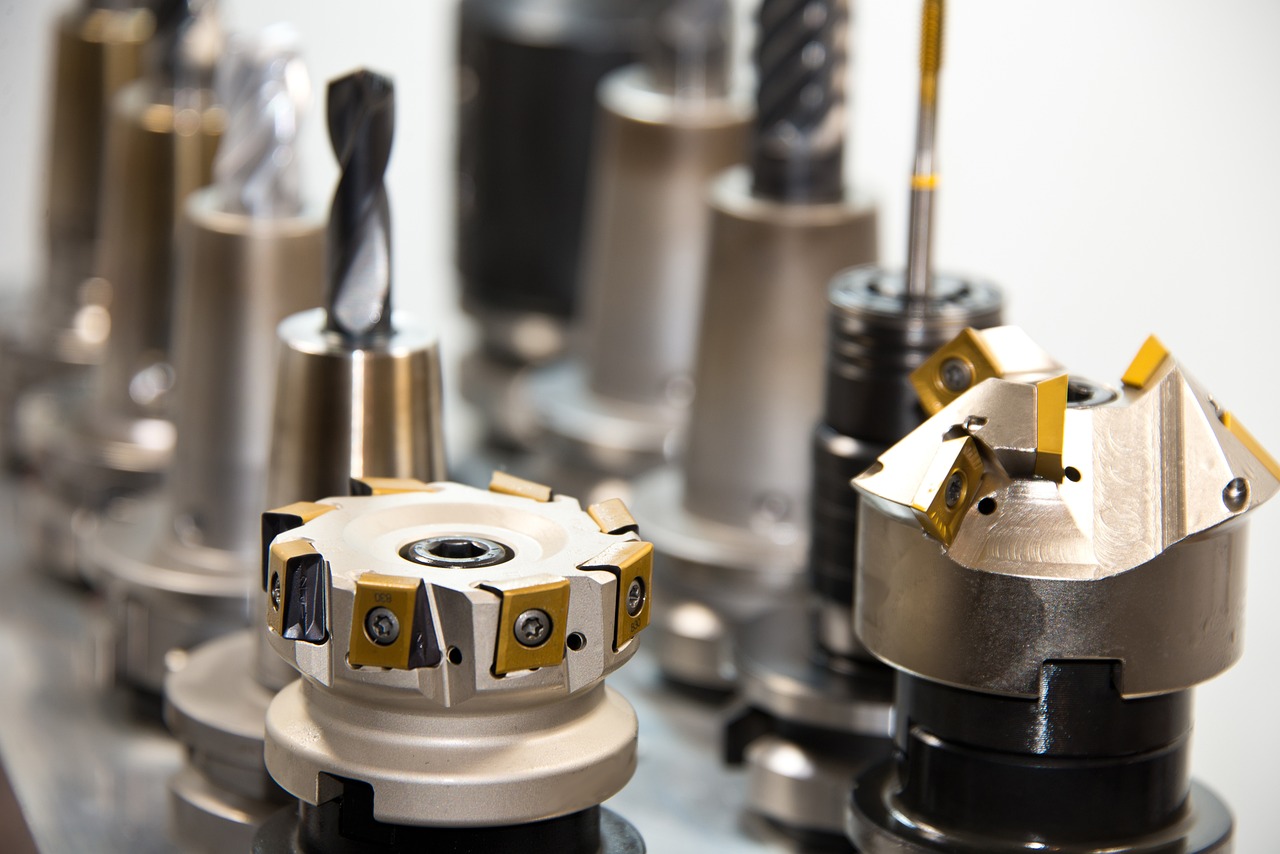
Choosing the right drill bits is crucial for successful metalworking with a drill press. High-speed steel (HSS) drill bits are versatile and suitable for a wide range of metals, including aluminum, brass, and mild steel. For more demanding applications, such as stainless steel or hardened steels, cobalt or carbide drill bits offer better performance and durability. Specialized drill bits, such as step bits or hole saws, may be required for specific hole sizes or shapes. Selecting the appropriate drill bit for the material and hole size ensures clean and accurate holes in your metalwork.
Required clamps and vises
Using clamps and vises is essential to secure your workpiece firmly in place, preventing movement or instability during drilling. Opt for heavy-duty drill press vises or bench vises made from cast iron or steel, as they provide the necessary strength and stability for metalworking. Magnetic clamps or holders can be used for certain applications, such as drilling on curved or irregular surfaces. Ensure the clamping mechanism is securely attached to the drill press table to avoid any movement or accidents while drilling. Properly clamping your workpiece will result in precise and consistent drilling results.
Additional accessories for precision and efficiency
To enhance the precision and efficiency of your metalworking tasks, consider investing in additional accessories for your drill press. A depth stop allows you to control the depth of your drill holes accurately. It can be especially beneficial for repetitive drilling tasks. An adjustable fence or guide can help maintain consistent hole placement and alignment across multiple workpieces. Using a center punch or layout dye can assist in marking precise hole locations before drilling. Finally, a cutting fluid or lubricant is crucial, especially when drilling harder metals, as it helps dissipate heat, reduces tool wear, and improves the quality of the drilled holes.

This image is property of pixabay.com.
Understanding Speed and Feed Rates
Determining the optimal speed for different materials
The speed at which the drill press operates plays a vital role in the quality of drilled holes and the overall metalworking process. Different materials require varying speeds to achieve optimal results. Generally, softer materials, such as aluminum or brass, require higher drill speeds. Harder materials, such as stainless steel or hardened steel, necessitate slower speeds to prevent overheating and preserve the life of the drill bit. Consult speed charts provided by drill bit manufacturers or reference guides for recommended speeds based on material type and drill bit diameter.
Calculating the appropriate feed rate
The feed rate refers to the rate at which the drill bit advances into the workpiece during drilling. Determining the correct feed rate is crucial to avoid excessive tool wear or breakage, as well as to achieve clean and efficient cutting. A general rule of thumb is to use a slower feed rate for harder materials and a faster feed rate for softer materials. However, it is essential to consider factors such as drill bit diameter, material thickness, and machine capabilities when calculating the feed rate. Experimentation and practice will help you find the optimal feed rate for your specific metalworking tasks.
Avoiding overheating and tool wear
Overheating and excessive tool wear are common issues during metalworking with a drill press. To prevent overheating, use cutting fluids or lubricants specific to the material being drilled. These help dissipate heat and reduce friction, ensuring efficient and accurate drilling. Applying moderate, constant pressure while drilling instead of excessive force can also prevent overheating. Keep an eye on the color of the chips being produced during drilling, as discolored or blue chips indicate overheating. Proper chip evacuation, achieved through the use of cutting fluids and appropriate feed rates, further prevents overheating and prolongs the life of the drill bit.
Basic Metalworking Techniques
Drilling accurate holes
Drilling accurate holes is a fundamental metalworking technique. Start by securing your workpiece firmly using clamps or a vise. Ensure that the drill bit is centered on the desired hole location and aligned perpendicular to the workpiece. Set the appropriate speed and feed rate for the material and drill bit being used. Begin drilling with a slow and steady downward pressure, allowing the drill bit to do the work. Maintain steady pressure throughout the drilling process, avoiding excessive force. Once the desired depth is reached, release the pressure and retract the drill bit from the workpiece. Remove any chips or debris from the hole before proceeding.
Counterboring and countersinking
Counterboring and countersinking are techniques used to create recessed areas or chamfers around drilled holes. Counterboring is the process of drilling a larger diameter hole around an existing hole while keeping the center aligned. This allows for the insertion of screws or bolts with their heads seated below the surface. Countersinking involves drilling a conical-shaped recess that accommodates the taper of the screw head, allowing it to sit flush with the surface. Both techniques can be achieved using specialized counterbore or countersink drill bits. Proper alignment and precise drilling depth are essential for successful counterboring and countersinking.
Reaming and tapping
Reaming is a metalworking technique used to refine and enlarge existing holes to precise dimensions. It helps achieve a higher level of accuracy, smoothness, and alignment. Reaming is often performed after initial drilling using a drill bit slightly smaller in diameter than the desired hole size. The reamer, comprised of multiple cutting edges, is rotated and moved through the hole with slow and steady pressure, removing minimal material with each pass. This creates a clean and accurate hole surface. Tapping, on the other hand, involves creating internal threads within a drilled hole to accommodate screws or bolts. The appropriate tap is chosen based on the desired thread size and pitch. Tapping requires careful alignment and steady pressure to ensure accurate thread creation.
Using the drill press for milling and grinding
Apart from drilling, a drill press can also be utilized for milling and grinding operations in metalworking. By attaching a milling attachment or rotary table to the drill press, it is possible to perform milling tasks such as slot cutting, grooving, and contouring. This expands the versatility of the drill press and allows for additional metal shaping possibilities. Similarly, various grinding attachments, such as grinding wheels or sanding drums, can be mounted on the drill press, enabling the smoothing and shaping of metal surfaces. These additional applications increase the value and functionality of the drill press in metalworking projects.
Advanced Metalworking Techniques
Using the drill press for metal shaping
The drill press can be used for metal shaping tasks beyond drilling and milling. By attaching specialized metal shaping tools, such as forming dies or cut-off tools, to the drill press, it becomes possible to shape and manipulate metalwork with precision. These tools allow for cutting, bending, and shaping metal in various forms, making the drill press a versatile machine for advanced metalworking tasks. However, it is crucial to follow safety guidelines and consult user manuals when utilizing the drill press for metal shaping to ensure proper technique and prevent accidents.
Boring and honing
Boring and honing are techniques used for enlarging or refining existing holes in metalwork. Boring involves removing material from the interior of a hole to achieve a desired size or shape. By using specialized boring tools, such as boring bars or adjustable boring heads, mounted to the drill press, accurate and controlled material removal can be achieved. Honing, on the other hand, is the process of refining and smoothing the interior surface of a hole to improve its dimensional accuracy and surface finish. Honing tools, such as honing stones or brushes, can be attached to the drill press to perform this operation. Both techniques require precise control and a gradual material removal process.
Working with sheet metal and tubing
The drill press can be a valuable tool for working with sheet metal and tubing in metalworking projects. When drilling holes in sheet metal, it is crucial to secure the workpiece using a suitable clamping mechanism to prevent distortion or movement. Choose a low speed and apply moderate, even pressure to avoid tearing or deforming the sheet metal. Cutting tools such as hole saws or step bits are effective for creating large-diameter holes in sheet metal. When working with tubing, a vise or specialized clamps can be used to secure the tube in position. Ensure proper alignment and use appropriate cutting tools to achieve clean and accurate results.
Creating threads with a tap and die
A tap and die set can be used in conjunction with a drill press to create internal and external threads in metalwork. The tap is used to cut precise internal threads inside a drilled hole, while the die is used to cut external threads on a cylindrical workpiece. To tap holes, secure the workpiece and align the tap perpendicular to the hole. Apply oil or cutting fluid, select the appropriate tapping speed and feed rate, and rotate the tap slowly and steadily, letting the tap remove material and form the threads. Similarly, for external threading, position the die on the cylindrical workpiece, apply cutting fluid, and rotate the workpiece using the drill press, ensuring proper alignment and controlled pressure.
Troubleshooting Common Issues
Dealing with chatter or vibration
Chatter or vibration during metalworking with a drill press can result in poor hole quality, decreased precision, and potential damage to the workpiece or tool. To minimize chatter, ensure the drill press is operating at the appropriate speed and feed rate for the material and drill bit being used. Inspect the workpiece and drill bit for any signs of damage, wear, or misalignment. Ensure proper clamping or holding mechanisms are in place to secure the workpiece firmly. Using cutting fluids or lubricants can also help reduce friction and minimize vibration. Experimenting with different drilling techniques and tool configurations may be necessary to minimize or eliminate chatter.
Preventing drill bit wandering
Drill bit wandering, where the drill bit deviates from the intended drilling path, can lead to inaccurate holes and compromised metalworking projects. To prevent drill bit wandering, start by ensuring proper alignment and centering of the drill bit on the desired hole location. Use a center punch or pilot holes to create a small indentation or starter hole, providing a guide for the drill bit. Apply consistent pressure and avoid excessive force while drilling, as it can cause the drill bit to deflect or wander. Finally, using sharp and appropriately sized drill bits for the material being drilled helps maintain control and accuracy throughout the drilling process.
Fixing drill bit breakage
Drill bit breakage can occur, particularly when drilling harder metals or when excessive force is applied. If a drill bit breaks during drilling, stop the drill press immediately to avoid further damage. Inspect the broken drill bit and workpiece for any remaining fragments or potential hazards. Carefully remove any debris from the drill press and work area. Assess the cause of the drill bit breakage, such as excessive force, incorrect speed, or worn-out drill bit. Replace the broken drill bit with a new one of the appropriate size and material. Avoid using damaged or compromised drill bits, as they can lead to poor drilling results and potential accidents.
Addressing poor cutting performance
Poor cutting performance during metalworking can result in rough surfaces, slow cutting speeds, and excessive tool wear. To address poor cutting performance, start by ensuring the drill press is operating at the correct speed and feed rate for the material. Check the sharpness and condition of the drill bit, as dull or worn-out bits can negatively affect cutting performance. Applying cutting fluids or lubricants specific to the material being drilled can help dissipate heat and reduce friction, resulting in improved cutting performance. Adjusting the cutting depth or using sharper cutting tools may also be necessary to achieve optimal cutting results.
Enhancing Safety and Efficiency
Using safety goggles and gloves
Safety goggles and gloves are essential personal protective equipment when working with a drill press for metalworking. Safety goggles protect your eyes from flying debris, metal shavings, or other potential hazards. They should fit securely and provide clear vision. Wearing gloves protects your hands from sharp edges, heat, or accidental contact with moving parts. Choose gloves made from materials that offer adequate dexterity and grip without compromising safety. Always wear safety goggles and gloves when using a drill press to ensure your well-being and minimize the risk of injuries.
Applying cutting fluids for cooling and lubrication
Cutting fluids or lubricants are essential for metalworking with a drill press, as they provide cooling and lubrication properties. Apply cutting fluid specific to the material being drilled to dissipate heat and minimize friction between the drill bit and workpiece. Proper cooling and lubrication prevent overheating of the drill bit and tool wear, resulting in improved drilling performance and longer tool life. Use cutting fluids according to the manufacturer’s instructions and always have an adequate supply on hand during metalworking operations.
Applying appropriate cutting techniques
Using appropriate cutting techniques ensures efficient and accurate metalworking with a drill press. Begin by aligning and centering the drill bit on the desired hole location. Apply steady and even pressure while drilling, avoiding excessive force that can lead to heat build-up or tool breakage. Use the appropriate speed and feed rate for the material being drilled, as this affects cutting performance and hole quality. Regularly clear away chips and debris from the drill bit and workpiece to maintain a clean cutting surface. Applying correct cutting techniques promotes safety, precision, and productivity during metalworking with a drill press.
Securing workpieces properly
Properly securing workpieces is crucial for safe and accurate metalworking with a drill press. Ensure the workpiece is securely clamped or held in place using appropriate clamps, vises, or magnetic holders. Avoid using your hands or fingers to stabilize the workpiece while drilling, as this can lead to injuries. If the workpiece is larger or heavier, consider using additional support, such as a workbench or stand, to prevent movement or instability during drilling. Regularly inspect the clamping mechanism and ensure it is securely attached to the drill press table. Securely held workpieces ensure the drill press operates smoothly, leading to better hole quality and decreased risk of accidents.
Tips and Tricks for Successful Metalworking
Measuring and marking techniques
Accurate measuring and marking techniques are essential for successful metalworking with a drill press. Use a quality measuring tape or a caliper to measure and mark hole locations accurately. Double-check your measurements before proceeding with drilling. Graduated drill press tables or angle finders can be used to achieve precise hole placement and alignment. Consider using layout dyes or center punches to mark hole locations before drilling. This provides a clear guide for the drill bit and reduces the risk of drill bit wandering. Developing good measuring and marking practices improves efficiency and enhances the quality of your metalworking projects.
Using jigs and fixtures
Jigs and fixtures are valuable tools when performing repetitive or complex drilling tasks in metalworking. A jig is a specialized device that guides the drill bit to ensure consistent hole placement and alignment. It can improve accuracy and reduce the time and effort required for multiple hole drilling. A fixture is a clamping or holding device that securely positions the workpiece for precise drilling. It ensures repeatable results and minimizes the risk of movement or misalignment. Design or purchase jigs and fixtures specific to your metalworking needs to enhance productivity and achieve consistent and accurate results.
Optimizing drilling speed and depth
Optimizing the drilling speed and depth is crucial to achieve satisfactory results in metalworking. When determining the drilling speed, consider the material being drilled and the diameter of the drill bit. Smaller drill bits and softer materials require higher speeds, while larger drill bits and harder materials necessitate slower speeds. Take into account the capabilities of your drill press and adjust the speed accordingly. Pay attention to the depth of the hole being drilled, ensuring it matches the intended specifications. Using depth stops or tape markers on the drill bit provides a visual reference and helps maintain consistent drilling depths.
Maintaining the drill press for longevity
Regular maintenance of the drill press is essential for its longevity and optimal performance. Keep the drill press clean by regularly removing chips, dust, and debris from the table, chuck, and other components. Lubricate the moving parts, such as the spindle and column, according to the manufacturer’s recommendations to prevent friction and ensure smooth operation. Inspect the power cords and connections for any signs of damage or wear, and replace them if necessary. Store the drill bits and accessories in a clean and organized manner to prevent damage and loss. Following proper maintenance practices will help extend the lifespan of your drill press, ensuring reliable metalworking capabilities for years to come.


