If you’re a DIY enthusiast looking to expand your tool collection, a drill press is a handy addition that can bring a whole new level of precision to your projects. But do you know the various ways you can utilize this versatile tool? In this article, we’ll explore three common uses of a drill press that you may not have considered before. From creating perfectly straight holes to tackling more complicated tasks like mortising and sanding, a drill press can be your go-to tool for a range of projects. So, let’s dive in and discover how you can make the most out of this powerful tool in your workshop.
Drilling Holes
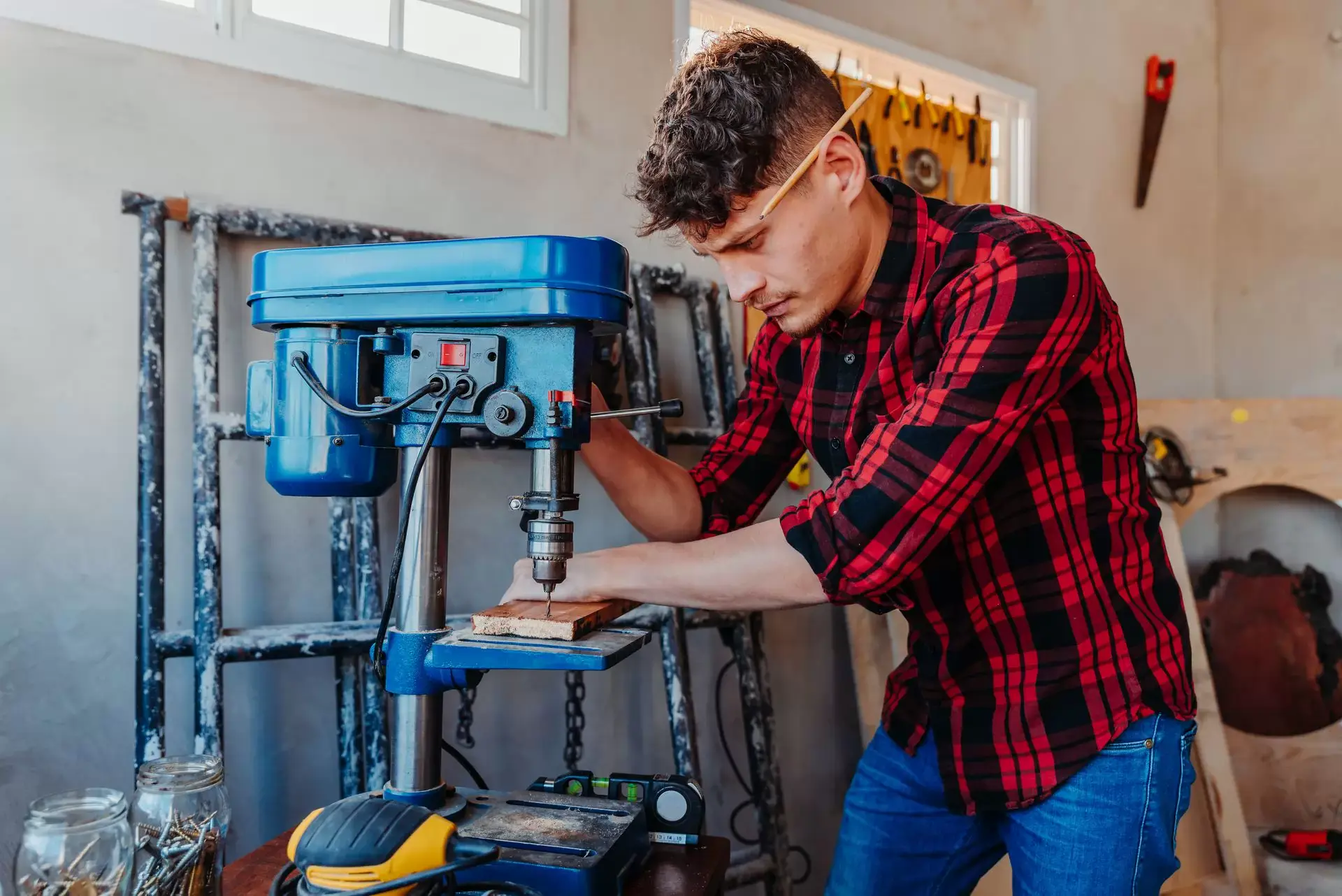
A drill press is an essential tool when it comes to drilling holes with accuracy and precision. Whether you are a DIY enthusiast or a professional woodworker, having the ability to drill clean and precise holes is crucial for achieving the desired results in any project.
Accuracy and Precision
One of the main advantages of using a drill press is the ability to achieve accurate and precise holes. Unlike handheld drills, which can be prone to wobbling and inconsistent depth, a drill press provides stability and control throughout the drilling process. The sturdy base and adjustable drill table ensure that your drill bit remains aligned, resulting in perfectly perpendicular holes.
By utilizing the adjustable depth stop feature, you can also set the desired drilling depth, allowing for consistent and uniform holes. This is particularly important when working on projects that require multiple holes of the same depth, such as installing cabinet hardware or creating dowel joints.
Different Hole Sizes
Another benefit of using a drill press is the versatility it offers in creating holes of various sizes. With the wide range of drill bits available, you can easily switch between different sizes to accommodate your specific needs. From small pilot holes to large diameter holes for plumbing or wiring, a drill press enables you to drill holes of any size with ease and precision.
The ability to create holes of different sizes opens up a world of possibilities when it comes to woodworking and other DIY projects. Whether you are building furniture, constructing shelves, or even working on intricate wood carvings, a drill press allows you to tackle any task with confidence.
Various Materials
While drilling holes in wood is the most common application for a drill press, it is not limited to woodwork alone. A drill press is also capable of drilling through various other materials, including metal, plastics, and composites. This versatility makes it a valuable tool for a wide range of projects, from metalworking to DIY repairs.
When drilling through different materials, it is important to adjust the speed and feed rate accordingly. Different materials require different drilling speeds to ensure clean and efficient holes. With a drill press, you have the ability to control the speed and feed rate, allowing you to achieve optimal results regardless of the material you are working with.
Repetitive Drilling
One of the key advantages of using a drill press is its efficiency in repetitive drilling tasks. Whether you need to create a series of evenly spaced holes or replicate a specific pattern, a drill press makes the process quick and easy.
By utilizing features such as a fence or jig, you can ensure that each hole is drilled at the exact same location, eliminating the need for tedious measurements and marking. This is especially beneficial when working on projects that require precision and consistency, such as installing hinges or creating dowel joints.
With the ability to adjust the drill press for depth, speed, and feed rate, you can streamline the drilling process and save valuable time and effort. This efficiency is particularly valuable when working on large-scale projects or when dealing with tight deadlines.
Creating Mortises
In addition to drilling holes, a drill press can also be used to create mortises, which are rectangular recesses used for joining two pieces of wood together. By utilizing specific drill bits and techniques, you can achieve clean and precise cuts that result in strong and secure joints.
Clean and Precise Cuts
When it comes to creating mortises, clean and precise cuts are crucial for achieving strong and visually appealing joints. A drill press allows you to achieve this level of precision by providing stability and control throughout the cutting process.
By using a mortising attachment or a mortising bit with a chisel, you can create clean and square-sided mortises with ease. The adjustable table and depth stop feature ensure that each cut is consistent and uniform, resulting in joints that fit together seamlessly.
Consistent Depth
Consistency in depth is another important factor when creating mortises. Unlike handheld routers or chisels, which can be prone to human error, a drill press allows you to set the desired depth and achieve uniform results.
By adjusting the depth stop feature, you can ensure that each mortise is cut to the exact same depth, making it easier to fit the corresponding tenon or dowel. This level of consistency not only improves the overall strength of the joint but also saves you time and effort in the fitting process.
Efficiency in Mortise Production
Another advantage of using a drill press for creating mortises is the efficiency it offers. By utilizing the various features and accessories available, you can streamline the mortise production process and increase productivity.
For example, using a mortising attachment or a mortising bit with a chisel allows you to remove material more efficiently than traditional chisel methods. Some drill presses even come with built-in mortising capabilities, further enhancing the efficiency of the process.
By integrating a drill press into your woodworking arsenal, you can simplify the process of creating mortises and achieve professional-quality joints in a fraction of the time.
Sanding and Polishing
A drill press is not limited to drilling and cutting tasks; it can also be utilized for sanding and polishing woodwork. By attaching specific sanding and polishing accessories, you can achieve a smooth and flawless finish on your projects.
Sanding Drum Attachment
One of the key accessories for sanding with a drill press is a sanding drum attachment. This attachment allows you to attach sanding sleeves of different grits to the drill press, providing a convenient and efficient way to sand large areas or intricate details.
The sanding drum attachment rotates at high speeds, allowing the sanding sleeve to remove material quickly and effectively. By adjusting the speed of the drill press and selecting the appropriate grit, you can achieve the desired level of smoothness and remove imperfections from the wood surface.
Smooth and Even Finish
The ability to achieve a smooth and even finish is crucial for any woodworking project. Whether you are preparing a piece for staining or painting, or simply enhancing the natural beauty of the wood, a drill press can help you achieve the desired results.
By utilizing the precise control and adjustable speed features of a drill press, you can maintain a consistent sanding motion and avoid the risk of uneven spots or over-sanding. This level of control allows you to achieve a flawless finish that showcases the true beauty of the wood.
Polishing Wheel Attachment
In addition to sanding, a drill press can also be used for polishing woodwork. By attaching a polishing wheel to the drill press, you can achieve a high-gloss finish that enhances the aesthetic appeal of your projects.
A polishing wheel rotates at high speeds, allowing you to apply polishing compounds or waxes evenly on the wood surface. By adjusting the speed of the drill press and applying the appropriate pressure, you can achieve a mirror-like finish that elevates the overall look of your woodwork.
Whether you are working on small decorative pieces or larger furniture items, a drill press with sanding and polishing capabilities can help you achieve professional-level results.
Fluting Woodwork
Fluting is the process of creating decorative grooves or channels on the surface of woodwork. This technique adds visual interest and complexity to a piece, making it an ideal choice for enhancing the overall design of furniture, moldings, or even musical instruments.
Decorative Woodworking
Fluting is often used in decorative woodworking to add texture and visual appeal to a piece. By creating grooves or channels in a specific pattern or arrangement, you can transform a simple piece of wood into a work of art.
A drill press allows you to achieve consistent and symmetrical flutes, ensuring that each groove is identical in depth and width. This level of precision is essential for creating visually pleasing fluted designs that catch the eye and add a unique touch to your woodworking projects.
Consistent and Symmetrical Flutes
Achieving consistent and symmetrical flutes can be a challenging task, particularly when working with handheld tools. However, with the stability and control provided by a drill press, you can easily overcome this challenge.
By utilizing a fluting bit and setting the appropriate depth and spacing, you can ensure that each flute is identical in both width and depth. The precise control offered by a drill press results in flutes that are symmetrical and visually appealing, enhancing the overall aesthetics of your woodwork.
Efficiency and Precision
Fluting woodwork can often be a time-consuming and labor-intensive process. However, by utilizing a drill press, you can increase both efficiency and precision in your fluting projects.
The ability to set the appropriate depth and spacing on a drill press allows you to quickly and accurately create multiple flutes in a fraction of the time it would take with traditional hand tools. This efficiency is particularly valuable when working on larger projects or when repetitive flutes are required.
By incorporating fluting into your woodworking repertoire and utilizing the capabilities of a drill press, you can take your projects to the next level and create stunning pieces that are sure to impress.
Counterboring and Countersinking
Counterboring and countersinking are techniques used to create recessed areas in wood or metal, allowing screws or bolts to be flush with the surface. These techniques not only provide a professional finishing touch but also ensure a secure and stable connection.
Depth Control
Counterboring and countersinking require precise depth control to achieve the desired results. Inaccurate depth can lead to screws or bolts that are either too high or too low, compromising the strength and aesthetics of the joint.
By utilizing a drill press with adjustable depth stop feature, you can easily set the desired depth for the counterbore or countersink. This ensures consistent and uniform results, allowing for screws or bolts to sit flush with the surface, providing a neat and professional appearance.
Accurate and Uniform Countersinks
The accuracy and uniformity of countersinks are crucial for achieving a secure and stable connection between two pieces of wood or metal. Inconsistent or uneven countersinks can result in screws that do not sit flush with the surface, compromising the strength of the joint.
By using a drill press, you can achieve accurate and uniform countersinks with ease. The stability and control provided by a drill press ensure that each countersink is identical in size and depth. This level of precision not only improves the strength and stability of the connection but also enhances the overall aesthetics of the finished piece.
Professional Finishing Touch
When it comes to woodworking or metalworking projects, attention to detail is key. Adding counterbores or countersinks to your joints provides a professional finishing touch that elevates the overall quality and appearance of your work.
By utilizing a drill press for counterboring and countersinking, you can achieve consistent and precise results that add a touch of professionalism to your projects. Whether you are working on cabinets, furniture, or even metal structures, a drill press is a valuable tool for creating clean and professional-looking connections.
Shaping Woodwork
Shaping woodwork allows you to create unique and intricate designs, turning a simple piece of wood into a work of art. A drill press can be used to achieve precise and controlled shaping, enabling you to explore a variety of shape options and unleash your creativity.
Versatility in Shape Options
One of the advantages of using a drill press for shaping woodwork is the versatility it offers in shape options. With a wide range of specialized bits and attachments available, you can create a variety of shapes and profiles, from simple curves to complex and intricate designs.
By adjusting the speed and feed rate of the drill press, you can control the cutting action and achieve the desired shape. This versatility allows you to explore various design possibilities, making it an ideal choice for custom furniture, decorative moldings, or even artistic sculptures.
Precision and Control
When it comes to shaping woodwork, precision and control are essential for achieving the desired results. A drill press provides the stability and control necessary for making accurate and clean cuts, even when working on intricate details.
By utilizing the adjustable depth stop feature and a proper cutting bit, you can ensure that each cut is consistent and uniform. This level of precision allows you to shape the woodwork exactly as intended, resulting in smooth curves, sharp edges, and intricate details that showcase your craftsmanship.
Complex and Intricate Designs
With the precision and control offered by a drill press, you can take your woodworking skills to the next level by tackling complex and intricate designs. From intricate scrollwork to ornate carvings, a drill press provides the necessary tools to turn your creative visions into reality.
By combining the versatility of shape options, the precision of the drill press, and your own creativity, you can create unique and visually stunning pieces that are sure to impress. Whether you are a seasoned woodworker or just starting out, a drill press opens up a world of possibilities when it comes to shaping woodwork.
Tapping Threads
Tapping threads is a technique used to create internal threads in wood or metal, allowing for the insertion of screws, bolts, or threaded rods. By utilizing specialized tapping bits and the capabilities of a drill press, you can achieve consistent and accurate threads in a variety of materials.
Tap Size Flexibility
Tapping threads requires the use of specific tap sizes to match the desired thread dimensions. A drill press offers the flexibility to accommodate a wide range of tap sizes, allowing you to adapt to different projects and thread requirements.
By adjusting the drill press speed and selecting the appropriate tap size, you can achieve consistent and accurate threads that fit the corresponding screws or bolts. This flexibility ensures that you can tackle a variety of projects with ease and confidence.
Consistent and Accurate Threads
One of the advantages of using a drill press for tapping threads is the ability to achieve consistent and accurate results. Unlike handheld tapping tools, which can be prone to misalignment or insufficient depth, a drill press provides the stability and control necessary for precise thread creation.
By utilizing the adjustable depth stop feature, you can set the desired depth for the tap, ensuring that each thread is cut to the correct depth. This level of consistency and accuracy results in threads that fit tightly and securely, providing a strong and reliable connection.
Time and Effort Efficiency
Tapping threads manually can be a time-consuming and labor-intensive process, particularly when working with harder materials or larger thread sizes. However, by utilizing a drill press, you can increase both time and effort efficiency in your thread tapping tasks.
A drill press allows you to tap threads at a controlled speed and with less physical effort compared to handheld tools. This not only saves you valuable time but also reduces the risk of fatigue or injury during the process. By incorporating a drill press into your tapping workflow, you can achieve consistent and accurate threads in a fraction of the time and effort.
Metalworking
While a drill press is commonly associated with woodworking tasks, it is also a valuable tool for metalworking projects. With the right drill bits and techniques, a drill press can provide controlled and accurate drilling in various types of metal.
Drilling Metal
Drilling through metal requires different techniques and considerations compared to drilling through wood or other materials. Metal is a harder and more abrasive material, which can pose challenges when it comes to achieving clean and accurate holes.
By utilizing specific drill bits, such as high-speed steel or cobalt bits, and adjusting the drill press speed and feed rate accordingly, you can achieve controlled and accurate drilling in metal. The stability and control provided by a drill press ensure that the drill bit remains aligned and prevents the drill from wandering, resulting in clean and precise holes.
Controlled Speed and Feed
Controlling the speed and feed rate is crucial when drilling through metal. Different types of metal require different drilling speeds to prevent overheating, reduce tool wear, and achieve optimal cutting performance.
A drill press allows you to adjust the speed and feed rate depending on the type and thickness of the metal you are working with. This precision control ensures that the drill bit cuts through the metal efficiently, without causing damage or compromising the quality of the hole.
By utilizing a drill press for metalworking tasks, you can achieve accurate and clean holes, enhancing the quality and durability of your metal projects.
Woodturning
Woodturning is a woodworking technique that involves rotating a piece of wood on a lathe and shaping it with various cutting tools. While a lathe is the primary tool for woodturning, a drill press can be used to enhance safety and stability during the turning process.
Turning Bowls and Spindles
When it comes to turning bowls or spindles, a drill press can be a valuable tool for enhancing safety and stability. By using a drill press to pre-drill the centers of the workpieces, you can ensure a secure and accurate connection on the lathe.
By applying the necessary precautions, such as using a live center or a chuck, you can safely transfer the pre-drilled workpiece onto the lathe. The pre-drilled center helps to maintain stability and alignment during the turning process, allowing for smoother and more controlled shaping.
Even and Smooth Finish
Achieving an even and smooth finish is essential when it comes to woodturning. A drill press can help in achieving this by providing a stable and consistent starting point for the turning process.
By pre-drilling the centers of the workpieces using a drill press, you can ensure that the lathe centers align perfectly with the workpiece. This alignment helps to prevent wobbling or vibration during turning, resulting in a smoother and more even finish.
By utilizing a drill press in conjunction with a lathe, you can enhance safety, stability, and precision in your woodturning projects, ensuring quality results every time.
Pocket Hole Joinery
Pocket hole joinery is a popular technique used to create strong and secure joints in woodworking projects. This method involves drilling angled holes, called pocket holes, and using specialized screws to join two pieces of wood together. A drill press can play a vital role in achieving accurate and efficient pocket hole joinery.
Strong and Secure Joints
One of the main advantages of pocket hole joinery is its ability to create strong and secure joints. By drilling pocket holes at an angle, the screws used in pocket hole joinery act as clamps, pulling the joint tight and creating a strong bond between the two pieces of wood.
A drill press allows you to achieve accurate and consistent pocket holes, ensuring a tight fit between the screw and the pocket hole. This precise fit maximizes the joint’s holding strength, providing a reliable connection that can withstand heavy loads and stress.
Efficient and Repeatable Production
Pocket hole joinery is not only strong but also efficient, making it an ideal choice for mass production or assembly line projects. By utilizing a drill press, you can streamline the pocket hole drilling process and increase efficiency in production.
A drill press allows you to set the desired drilling depth, ensuring that each pocket hole is drilled to the same consistent depth. This level of consistency not only improves the joint’s strength but also simplifies the assembly process, as each pocket hole aligns perfectly with the corresponding screw.
By incorporating pocket hole joinery into your woodworking projects and utilizing the capabilities of a drill press, you can achieve strong and efficient joints that save time and effort, without compromising on quality.
In conclusion, a drill press is a versatile and invaluable tool for a wide range of woodworking and metalworking projects. From drilling accurate and precise holes to shaping woodwork and tapping threads, a drill press provides the stability, control, and efficiency necessary to achieve professional-quality results. By utilizing the various features and accessories available, such as sanding drum attachments, fluting bits, or tapping bits, you can enhance your capabilities and unleash your creativity in your DIY endeavors. Whether you are a seasoned DIY enthusiast or just starting out, investing in a drill press is a smart choice that will open up a world of possibilities in your next project.