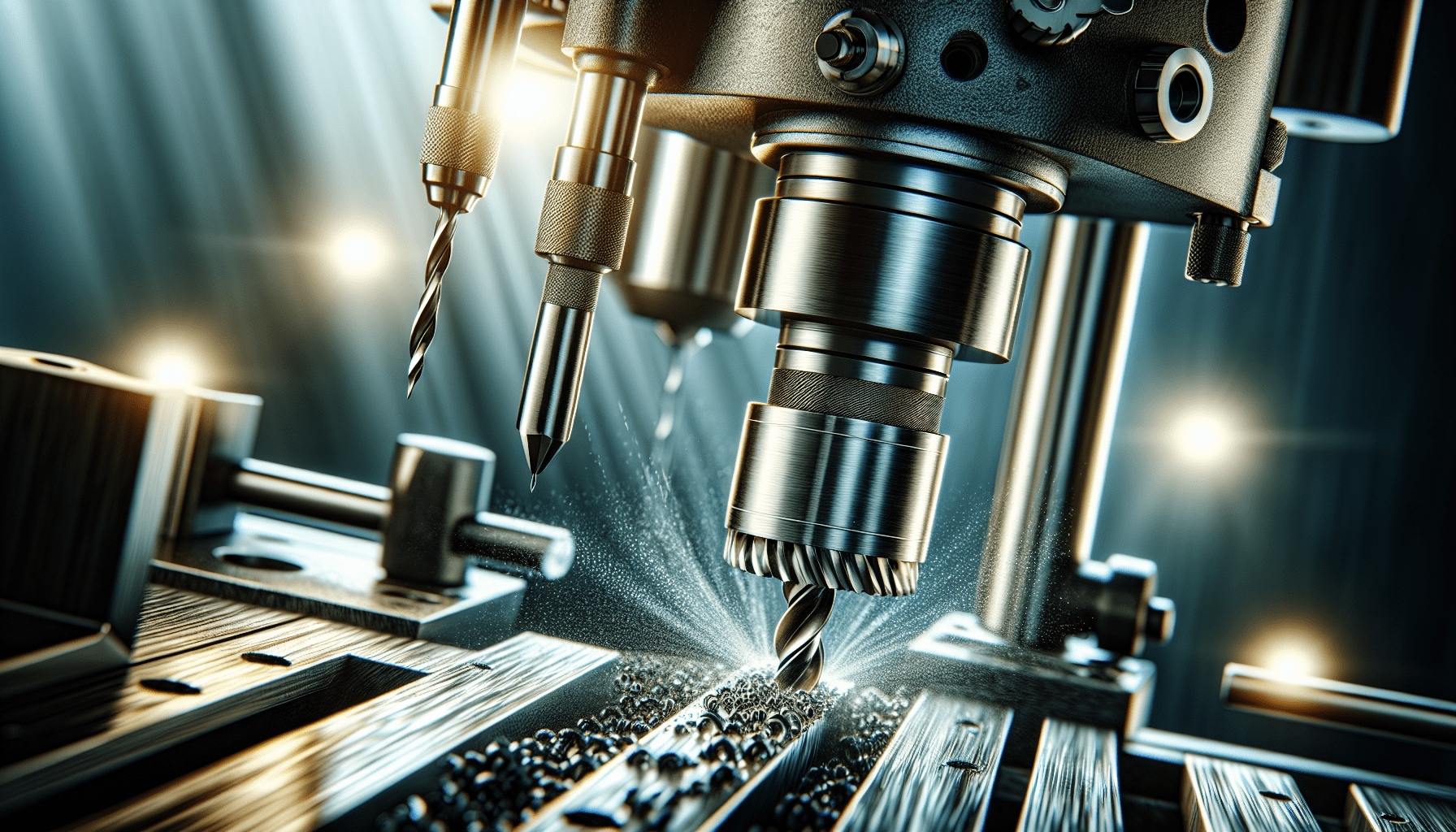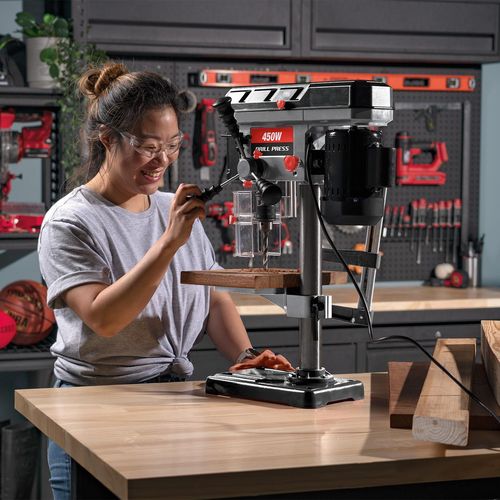
If you’re a passionate DIY enthusiast, you’ve probably come across the debate on whether or not you really need a drill press. With so many power tools available, it’s easy to question if this particular tool is worth the investment. In this article, we’ll explore the benefits of owning a drill press and how it can enhance your woodworking and metalworking projects. Whether you’re a seasoned craftsman or just starting out, read on to discover why a drill press could be a valuable addition to your tool arsenal.
The Basics of a Drill Press
Overview of a drill press
A drill press, also known as a drilling machine or bench drill, is a workshop tool that is used to bore holes in a variety of materials such as wood, metal, and plastic. It consists of a base, a column, a table, a spindle, and a drill head. The drill head is attached to the spindle and can be raised or lowered to adjust the depth of the hole. The table provides support for the workpiece and can be tilted or rotated to accommodate different angles and positions. Overall, a drill press provides greater precision, accuracy, and control compared to handheld power drills.
Key components of a drill press
The main components of a drill press include:
- Base: The base provides stability and support for the entire machine. It is usually made of cast iron or steel and is designed to minimize vibrations.
- Column: The column is a vertical bar that connects the base to the head of the drill press. It provides stability and strength to the machine.
- Table: The table is the flat surface on which the workpiece is placed. It can be adjusted vertically and can also be tilted or rotated to accommodate different drilling angles.
- Spindle: The spindle is the rotating shaft that holds the drill bit. It is attached to the drill head and can be raised or lowered to adjust the depth of the hole.
- Drill head: The drill head consists of the motor and the drive mechanism that powers the spindle. It can be adjusted in height and can also be swiveled to drill at an angle.
Advantages of using a drill press
Using a drill press offers several advantages:
- Precision and accuracy: The stable design and fixed drilling position of a drill press enable precise and accurate drilling, ensuring straight and centered holes.
- Control and stability: The fixed table and solid base provide stability and control during drilling, reducing the chances of slips and mistakes.
- Consistency: A drill press allows for consistent drilling depth and speed, leading to uniform and professional-looking results.
- Versatility: Drill presses can be used for various applications and materials, including woodworking, metalworking, carpentry, and milling.
- Safety: With proper usage and safety precautions, a drill press minimizes the risk of accidents and injuries compared to handheld power drills.
Types of Drill Presses
Benchtop drill press
A benchtop drill press is a compact and portable option that is designed to be placed on a workbench or table. It is suitable for DIY enthusiasts and hobbyists who have limited space or need to move the drill press frequently. Despite its smaller size, a benchtop drill press still offers adequate power and functionality for most drilling tasks.
Floor standing drill press
A floor standing drill press, also known as a pedestal drill, is a larger and heavier option that is designed for professional use or workshops with dedicated space. It is more powerful and robust compared to a benchtop drill press, making it suitable for heavy-duty drilling tasks. Floor standing drill presses often have additional features such as adjustable height and larger working capacity.
Magnetic drill press
A magnetic drill press, also called a mag drill, is a specialized type of drill press that uses a magnetic base to attach to and drill into metal surfaces. It is commonly used in metalworking, construction, and industrial applications. The magnetic base provides stability and allows for drilling in horizontal, vertical, and overhead positions, making it highly versatile and convenient.
Radial arm drill press
A radial arm drill press, also known as an arm drill or pillar drill, is a unique type of drill press that features a movable arm that can be rotated and extended to reach different areas of the workpiece. This flexibility and adjustability make it ideal for drilling large or irregularly shaped materials. Radial arm drill presses are commonly used in metal fabrication, woodworking, and construction industries.
Considerations before Buying a Drill Press
Applications and Projects
Before buying a drill press, it is important to consider the applications and projects for which you will be using the tool. Different drill press models have varying capabilities and features that make them more suitable for specific tasks. Determine if you need a drill press for woodworking, metalworking, carpentry, or other specialized applications to ensure that you choose the right tool for your needs.
Available Space
Consider the available space in your workshop or garage before purchasing a drill press. Benchtop drill presses are compact and portable, making them suitable for small spaces or those who require mobility. On the other hand, floor standing drill presses require a dedicated area and offer larger working capacities. Ensure that you have sufficient room for the drill press and any additional accessories or attachments.
Budget
Set a budget for your drill press purchase. Prices can vary significantly depending on factors such as brand, size, features, and quality. Consider your budget and prioritize the features that are most important to you. While it may be tempting to opt for a cheaper model, it is often worth investing in a quality drill press that will provide better performance and durability in the long run.
Accuracy and Precision
If precision and accuracy are crucial for your projects, pay close attention to the drill press’s specifications in terms of depth control, spindle runout, and alignment. Look for features such as depth stops, laser guides, or digital readouts that can enhance the accuracy and precision of your drilling.
Speed and Power
Consider the speed and power requirements for your drilling tasks. Drill presses typically have adjustable speed settings, allowing you to choose the appropriate speed for different materials and drill bits. Higher horsepower or wattage ratings indicate greater power and capability for drilling through tougher materials. Assess your needs and ensure that the drill press you choose can handle the materials and tasks you have in mind.
Durability and Quality
Look for a drill press that is made from high-quality materials and built to last. A sturdy and durable construction ensures that the drill press will withstand heavy use and provide reliable performance over time. Read customer reviews and consider reputable brands known for their quality and durability.
Pros and Cons of Owning a Drill Press
Advantages of owning a drill press
- Precise and accurate drilling: A drill press allows for precise and accurate drilling, resulting in professional and high-quality results.
- Greater control and stability: The fixed position and sturdy construction of a drill press provide better control and stability compared to handheld power drills.
- Increased safety: With proper usage and safety precautions, a drill press reduces the risk of accidents and injuries.
- Versatile applications: A drill press can be used for various applications such as woodworking, metalworking, carpentry, and milling.
- Consistent results: The consistent drilling depth and speed offered by a drill press lead to uniform results and improved productivity.
Disadvantages of owning a drill press
- Size and space requirements: Drill presses, especially floor standing models, take up significant space in a workshop or garage.
- Initial cost: Drill presses can be more expensive compared to handheld power drills, especially for models with additional features and capabilities.
- Limited mobility: Once set up, drill presses are not easily portable and may require dedicated space in the workshop.
- Specialized use: While versatile, drill presses may not be suitable for every drilling task, especially those that require complex angles or confined spaces.
Applications and Projects Suitable for a Drill Press
Woodworking
A drill press is an essential tool for woodworking enthusiasts. It allows for precise drilling of holes for dowels, screws, and other joinery techniques. Additionally, a drill press can be used for mortising, creating pocket holes, and accurately drilling holes for installing hardware such as hinges or drawer pulls. The control and stability provided by a drill press are particularly beneficial for intricate woodworking projects.
Metalworking
In the field of metalworking, a drill press is indispensable for drilling holes in metal sheets, pipes, and other metal components. It enables the use of larger drill bits and provides the necessary power and stability to cut through tough metallic surfaces. A drill press is also useful for creating accurate holes for tapping, reaming, and counterboring in machining operations.
Carpentry
Carpenters can greatly benefit from a drill press for tasks such as drilling holes for wooden dowels, installing hardware, and creating precise joinery. Whether it’s building furniture, framing, or constructing cabinets, a drill press ensures accuracy and uniformity in hole placement. The ability to adjust the drilling depth and maintain consistent speeds makes a drill press an essential tool for professional carpentry work.
Milling and Drilling
In milling operations, a drill press can serve as a cost-effective alternative to a milling machine for small-scale projects. With the aid of milling attachments or rotary tables, a drill press can be used for light milling operations such as creating flat surfaces, cutting keyways, or producing accurate holes on a workpiece. This versatility makes a drill press a valuable tool for hobbyists or those working on home-based machining projects.
Drilling Techniques and Safety Measures
Drilling straight and centered holes
To ensure straight and centered holes when using a drill press, it is essential to align the workpiece correctly and use the appropriate drilling techniques. Start by securing the workpiece firmly to the drill press table using clamps or a vise. Use a center punch to mark the drilling point to guide the drill bit. Lower the drill bit slowly and steadily, applying even pressure. Maintain a straight drilling motion throughout the process.
Using the right drill bits and speeds
Choosing the appropriate drill bits and speeds for your drilling task is crucial to achieve the desired results. Different materials require different types of drill bits such as twist bits, spade bits, or Forstner bits. Refer to the manufacturer’s recommendations or consult drilling charts to determine the correct speed settings based on the material and drill bit size. Adjust the speed accordingly before starting the drilling operation.
Ensuring proper depth and accuracy
A drill press offers precise depth control, allowing you to achieve consistent drilling depths. Utilize depth stops or depth gauges to set the desired drilling depth. Measure and mark the required depth on the drill bit using tape or a depth collar. Slowly lower the drill bit until the mark aligns with the surface of the workpiece. Take your time and make minor adjustments as necessary to ensure accurate and consistent drilling depths.
Maintaining safety precautions
While using a drill press, it is essential to prioritize safety to prevent accidents and injuries. Always wear appropriate personal protective equipment, such as safety goggles, gloves, and ear protection, to safeguard against flying debris and noise. Secure the workpiece firmly to prevent it from rotating or shifting during drilling. Avoid loose clothing or jewelry that may get caught in the rotating parts. Additionally, always ensure that the drill press is turned off and unplugged when making adjustments or changing drill bits.
Alternatives to a Drill Press
Handheld power drills
Handheld power drills are a versatile tool that can perform many of the same tasks as a drill press. They offer mobility and can be used in various positions and angles, making them suitable for tight spaces or irregularly shaped workpieces. However, handheld power drills lack the stability, precision, and depth control provided by a drill press. They can be a suitable alternative if portability is a priority, or for light drilling tasks that do not require extensive accuracy.
Drill guides
A drill guide, also known as a drill bushing, is an accessory that can be used with a handheld power drill to achieve more precise drilling results. It consists of a guide sleeve and a bushing that aligns the drill bit and provides stability during drilling. Drill guides are ideal for drilling straight and centered holes or for repetitive drilling tasks. While they enhance accuracy compared to a handheld power drill alone, they still do not offer the same level of control as a drill press.
Drill stands
A drill stand, also called a drill press stand or drill support, is a device that transforms a handheld power drill into a makeshift drill press. It provides a stable base and a guide for the drill bit, allowing for more controlled and accurate drilling. Similar to drill guides, drill stands are suitable for drilling straight holes in various materials. However, their stability and precision may not match that of a dedicated drill press. Drill stands can be a cost-effective option for occasional use or for those on a tight budget.
Choosing the Right Drill Press for Your Needs
Features to consider
When choosing a drill press, consider the following features based on your specific needs:
- Motor power: Higher horsepower or wattage ratings indicate greater drilling capabilities, especially for tougher materials.
- Speed settings: Look for a drill press that offers adjustable speed settings to accommodate different materials and drill bit sizes.
- Depth control: Ensure that the drill press has effective depth control mechanisms such as depth stops or depth gauges.
- Table size and adjustability: Consider the size and adjustability of the table to accommodate various workpiece sizes and drilling angles.
- Chuck size: Choose a drill press with a chuck that can accommodate the drill bits you commonly use.
- Additional features: Consider any additional features that may be beneficial, such as laser guides, digital readouts, or built-in work lights.
Comparing different models and brands
Research and compare different drill press models and brands to find the one that meets your requirements and budget. Read online reviews, visit hardware stores or workshops, and consult with professionals or fellow DIY enthusiasts for their recommendations. Consider the reputation of the brand, warranty coverage, and availability of spare parts when making your decision.
Reading customer reviews
Reading customer reviews can provide valuable insights into the performance and reliability of a specific drill press model. Look for reviews from users who have similar needs or projects to assess if the drill press will be suitable for your purposes. Pay attention to feedback regarding durability, ease of use, and accuracy, as these are important factors in determining the overall quality and satisfaction with the tool.
Seeking expert advice
If you are unsure about which drill press to choose or have specific questions or concerns, don’t hesitate to seek advice from experts in the field. Visit local hardware stores or workshops and discuss your needs with knowledgeable staff members. They can provide personalized recommendations based on your requirements and budget, ensuring that you make an informed decision.
Setting up and Maintaining Your Drill Press
Setting up the drill press
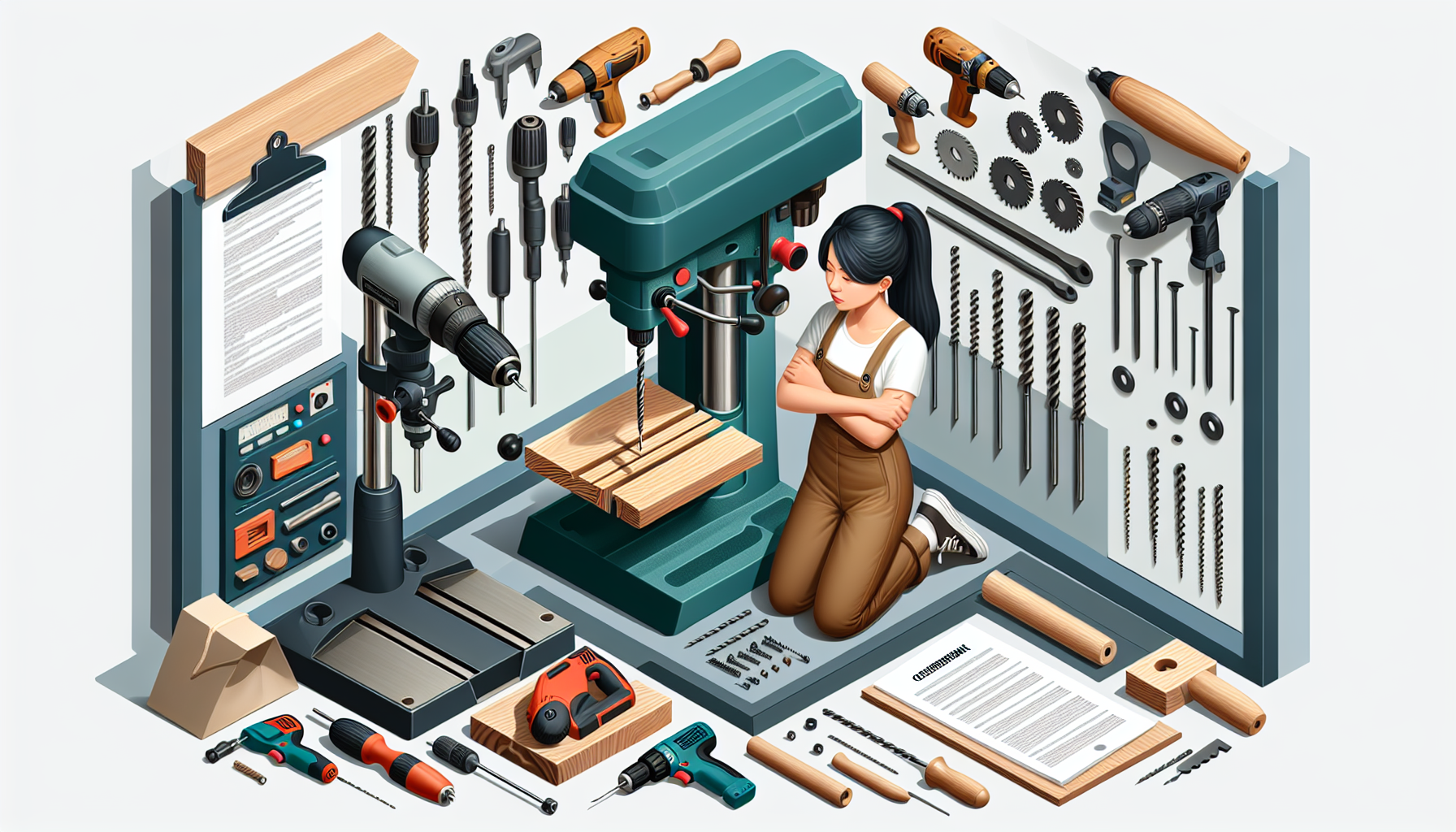
Proper setup of the drill press is essential to ensure safe and accurate drilling. Start by securely attaching the drill press to a stable workbench or floor, following the manufacturer’s instructions. Check that all bolts, screws, and clamps are tightened. Adjust the height of the table and align it with the drill bit, ensuring that it is perpendicular to the drill press column. Place the workpiece on the table and secure it firmly with clamps or a vise. Verify that the drill press is level and stable before turning it on.
Routine maintenance and cleaning
Regular maintenance and cleaning of your drill press will prolong its lifespan and ensure optimal performance. Keep the drill press clean by removing dust, chips, and debris after each use. Use a brush or compressed air to clean the table, column, and other exposed surfaces. Lubricate the moving parts, such as the spindle and depth-adjusting mechanism, according to the manufacturer’s recommendations. Periodically inspect the drill press for any signs of damage or wear, and promptly address any issues that may arise.
Replacing parts and accessories
Over time, certain parts or accessories of the drill press may need replacement due to wear or damage. Ensure that you have access to a reliable source of spare parts and accessories for your specific drill press model. Consult the manufacturer’s documentation or contact their customer service for assistance with ordering and replacing parts. Proper maintenance and timely replacement of worn or damaged components will help maintain the performance and safety of your drill press.
Exploring Additional Features and Attachments
Table attachments and extensions
Table attachments and extensions can enhance the versatility and functionality of your drill press. Additional table surfaces, often made of cast iron or aluminum, can provide larger work areas or support for larger workpieces. T-slots on the table allow for the use of clamps, jigs, or other accessories to secure the workpiece or guide the drilling process.
Fence systems and vises
Fence systems and vises are useful attachments for maintaining stability and accuracy during drilling. A fence system attaches to the drill press table and provides a guide for aligning the workpiece and ensuring consistent hole placement. A vise, on the other hand, securely holds the workpiece in place, preventing movement or rotation during drilling. Both fence systems and vises are especially beneficial for repetitive drilling tasks or when drilling at specific angles.
Clamping options
Clamping options, such as toggle clamps or quick-release clamps, can provide quick and secure methods for holding workpieces in place during drilling. These clamps can be attached to the table or other parts of the drill press for added stability and ease of use. They are particularly useful for irregularly shaped or small workpieces that may be difficult to secure with traditional clamping methods.
Drilling jigs and guides
Drilling jigs and guides are accessories designed to assist with specific drilling applications or achieve repetitive hole placements. They provide templates, guides, or preset hole positions that ensure precise and consistent drilling results. Examples include doweling jigs, drill guide blocks, or circle-cutting jigs. Using drilling jigs and guides can save time and effort by eliminating the need for measuring and marking each hole individually.
As you consider purchasing a drill press, weigh the advantages and disadvantages, evaluate your specific needs and projects, and take into account your available space and budget. Remember the importance of applying proper drilling techniques, maintaining safety precautions, and selecting the right drill press for your specific requirements. With the right drill press and techniques, you’ll be able to accomplish a wide range of projects with precision, accuracy, and ease. Happy drilling!