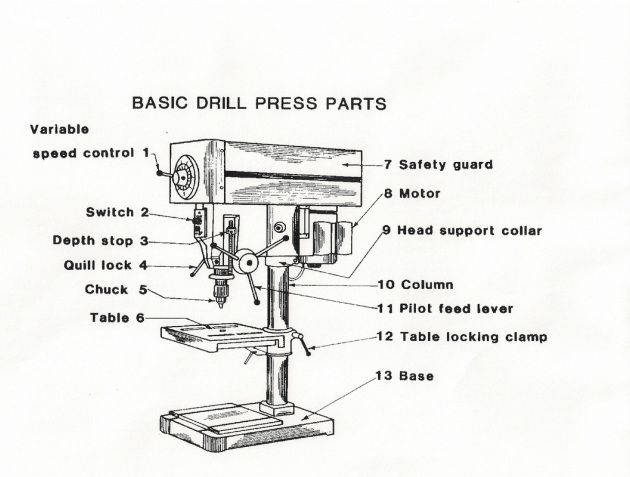
Have you ever wondered about the key components that make up a drill press? In this blog post, we will explore the various parts of a drill press and their functions, providing you with a comprehensive understanding of this essential tool for DIY enthusiasts. From the motor and spindle to the table and chuck, each component plays a vital role in ensuring accurate drilling and reliable performance. So, whether you’re a seasoned DIYer or new to the world of power tools, join us as we take a closer look at the inner workings of a drill press.
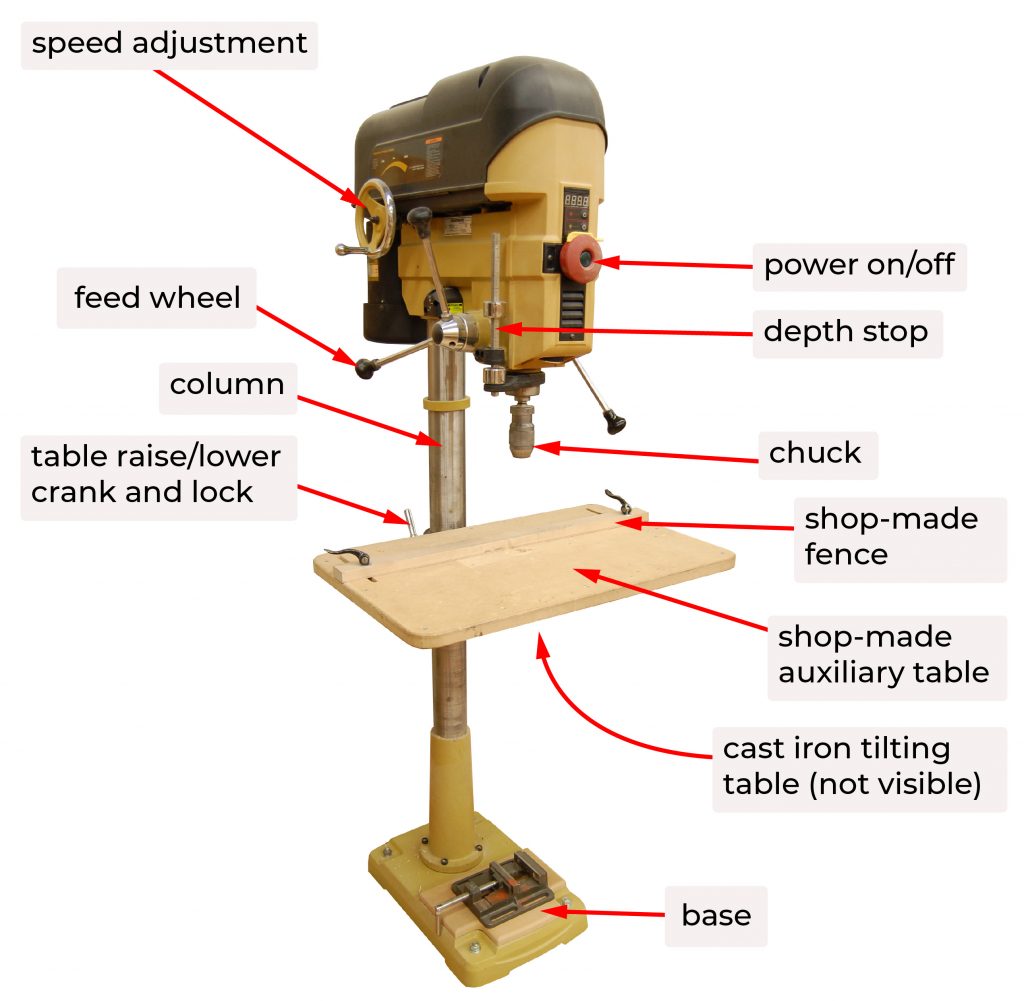
This image is property of pressbooks.bccampus.ca.
Base
Overview
The base of a drill press is the foundation upon which the entire machine is built. It provides stability and support, preventing the drill press from tipping over during operation. A sturdy base is crucial to ensure accuracy and safety while drilling. The base is typically made of cast iron or steel, which gives it strength and durability. It is designed to minimize vibrations and provide a solid platform for the other components of the drill press to function effectively.
Material
The material of the base plays a significant role in its strength and stability. Cast iron and steel are commonly used materials for drill press bases due to their ability to withstand heavy loads and resist wear and tear. Cast iron bases are known for their rigidity and excellent dampening properties, which help reduce vibrations during drilling. Steel bases, on the other hand, offer a balance of strength and weight, making them suitable for both light and heavy-duty applications.
Size and Stability
The size and stability of the base are crucial factors to consider when choosing a drill press. A larger base provides a more stable foundation, reducing the chances of the drill press tipping over during operation. Additionally, a larger base offers more surface area for securing the drill press to a workbench or floor, further enhancing its stability. It is important to ensure that the base of the drill press is proportional to the size and weight of the entire machine to maintain stability and prevent any wobbling or movement while drilling.
Head
Overview
The head of a drill press houses the motor, spindle, and chuck. It is responsible for providing power, controlling the drilling speed, and holding the drill bit securely in place. The head is typically adjustable, allowing for precise positioning of the drill bit for accurate drilling.
Motor
The motor of a drill press is the source of power for the machine. It provides the rotational force necessary for drilling holes in various materials. The motor is typically electrically powered and can vary in horsepower depending on the drilling requirements. A more powerful motor allows for drilling through tougher materials and provides greater torque for better performance.
Spindle
The spindle is a shaft that extends from the motor through the head of the drill press. It holds the drill bit securely in place and provides the necessary rotational motion to drive the bit into the workpiece. The spindle is typically made of steel or other durable materials to withstand the high-speed rotation and the pressure exerted during drilling.
Chuck
The chuck is the component that holds the drill bit in place on the spindle. It is adjustable and allows for different sizes of drill bits to be securely attached. The chuck can be tightened or loosened using a key or a keyless mechanism, depending on the design of the drill press. A keyless chuck offers convenience and quicker bit changes, while a keyed chuck provides a more secure grip on the drill bit.
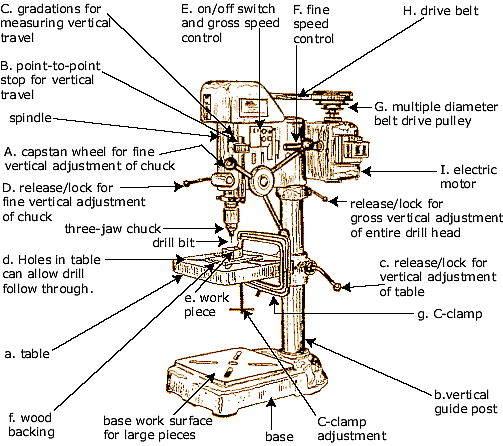
This image is property of www.efunda.com.
Table
Overview
The table of a drill press provides a flat and stable surface for supporting the workpiece during drilling. It is typically adjustable in height and can be tilted to accommodate drilling at different angles. The table is an essential component that ensures accuracy and precision in drilling operations.
Adjustability
The height adjustability of the table allows for drilling at different depths and accommodates workpieces of varying sizes. By raising or lowering the table, you can position the workpiece at the desired height relative to the drill bit for optimal drilling results. Some drill press tables also feature a swivel mechanism, allowing for tilting the table to drill at various angles, such as when drilling angled holes or creating beveled edges.
Size
The size of the drill press table is another important consideration. A larger table provides more surface area for supporting larger workpieces, offering better stability during drilling. It also provides more flexibility in positioning the workpiece, especially when drilling multiple holes or performing intricate drilling operations. Additionally, a larger table allows for the use of drilling accessories, such as vises and clamps, to secure the workpiece firmly in place.
Column
Overview
The column of a drill press is the vertical pillar that connects the base and the head of the machine. It provides stability and support, ensuring that the head remains in a fixed position during drilling operations. The column is a critical component that contributes to the overall rigidity and accuracy of the drill press.
Height
The height of the column determines the maximum drilling depth that can be achieved. The longer the column, the deeper the drill press can penetrate into the workpiece. It is essential to consider the maximum drilling depth required for your specific drilling tasks when selecting a drill press. Some drill presses also offer adjustable columns, allowing for fine-tuning of the drilling depth to suit different applications.
Sturdiness
The sturdiness of the column is crucial for maintaining stability and accuracy during drilling. A solidly built column minimizes vibrations and ensures that the head remains stationary, preventing any unwanted movement that could affect the drilling precision. The column is often made of high-quality materials, such as cast iron or steel, to provide optimal strength and rigidity.
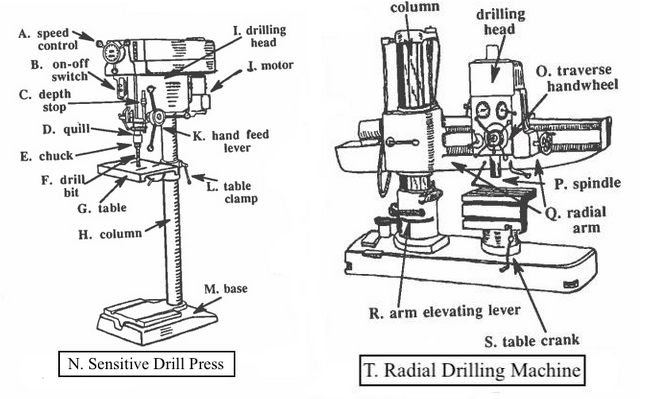
This image is property of mhcc.pressbooks.pub.
Quill
Overview
The quill of a drill press is a vertically movable part located inside the head. It holds the drill bit and provides the mechanism for extending or retracting the bit during drilling operations. The quill allows for precise control over the depth of drilling and provides a means to lock the drill bit in place securely.
Movement
The movement of the quill is controlled by a handle or lever, allowing for precise control over the drilling depth. By raising or lowering the quill, you can adjust the length of the drill bit exposed, thus determining the depth of the drilled hole. The smooth and precise movement of the quill ensures accurate and consistent drilling results.
Depth Stop
The depth stop is a feature typically found on drill presses that allows for setting a specific drilling depth. It provides a means to limit the travel of the quill, ensuring that the drill bit does not penetrate beyond the desired depth. This feature is particularly useful when repetitive drilling of holes at a consistent depth is required, as it saves time and ensures uniformity in hole depths.
Handle
Overview
The handle of a drill press is the control mechanism used to operate various functions of the machine. It provides ergonomic control over the drilling process, ensuring safety and ease of use. The handle is designed to be comfortable to grip and operate, allowing for smooth and precise movements.
Control
The control handle is typically used to adjust the speed and start or stop the drill press. It allows for easy and intuitive control over the drilling process, ensuring that the machine operates at the desired speed for the specific drilling task. Some drill presses also feature a reversing switch on the handle, enabling clockwise and counterclockwise rotation of the drill bit for added versatility.
Turning Mechanism
The turning mechanism of the handle converts the rotary motion of the operator’s hand into the vertical movement of the quill. It ensures smooth and precise operation, allowing for accurate positioning of the drill bit and control over the drilling depth. The turning mechanism is typically designed to minimize friction and provide a comfortable grip for prolonged use.

This image is property of imgv2-1-f.scribdassets.com.
Drilling Accessories
Overview
Drilling accessories are additional tools that enhance the functionality and versatility of a drill press. They provide means to secure the workpiece, hold the drill bit securely, and expand the range of drilling capabilities. Some commonly used drilling accessories include vises, clamps, and a variety of drill bits.
Vise
A vise is a device used for securely holding the workpiece in place during drilling. It provides stability and prevents the workpiece from moving or rotating while drilling. Vises come in various sizes and designs, allowing for different types of workpieces to be firmly secured to the drill press table. They typically feature adjustable jaws to accommodate various dimensions of the workpiece.
Clamp
Clamps are another option for securing the workpiece during drilling. They are particularly useful when dealing with irregularly shaped or delicate workpieces that may not fit well in a vise. Clamps provide a firm grip on the workpiece and can be easily adjusted and positioned for optimal drilling.
Drill Bits
Drill bits are the cutting tools used to create holes in various materials. They come in different sizes, shapes, and materials, each suitable for specific drilling applications. High-speed steel (HSS) drill bits are the most commonly used for general-purpose drilling, while specialty drill bits, such as masonry bits or hole saws, are designed for specific materials or hole sizes. Having a variety of drill bits on hand allows for greater versatility and precision in drilling operations.
Safety Features
Overview
Safety features are essential components of any drill press to ensure the well-being of the operator and prevent accidents during drilling. These features are designed to minimize the risk of injury and provide emergency stop mechanisms in case of unexpected occurrences.
Safety Guard
A safety guard is a protective cover that surrounds the drill bit and spindle during operation. It prevents accidental contact with the rotating drill bit, reducing the risk of injury. The safety guard typically features transparent panels, allowing for visibility of the drilling process while maintaining operator safety.
Emergency Stop
The emergency stop is a safety feature that enables the operator to quickly halt the drill press in case of an emergency or when immediate cessation is necessary. It is usually a large, prominent button located within easy reach of the operator. The emergency stop is designed to override all other functions and power down the drill press immediately, preventing any further movement or operation.
Safety Switch
The safety switch is a feature that ensures the drill press cannot be accidentally turned on or operated by unauthorized individuals, especially in situations where the machine is left unattended. It typically requires a key or a specific sequence of actions to activate the drill press, preventing accidental start-up and promoting safe usage.
This image is property of i.pinimg.com.
Power Source
Overview
The power source of a drill press determines its mobility and availability of power. Drill presses can be powered by either electricity or batteries, each offering distinct advantages and suitability for different applications.
Electric
Electric-powered drill presses are the most common type and are typically connected to a power outlet. They provide a continuous and reliable power source, enabling long hours of drilling without the need for battery changes or recharging. Electric drill presses are suitable for both professional and DIY applications, offering consistent power and performance.
Battery-powered
Battery-powered drill presses are portable and operate on rechargeable batteries. They offer the flexibility to work in areas without access to a power source, making them ideal for on-the-go projects or remote locations. Battery-powered drill presses are convenient and versatile, but they may have limitations in terms of run time and power output, requiring occasional battery changes or recharging.
Additional Features
Overview
In addition to the essential components, drill presses may also come with additional features that enhance their functionality and user experience. These features cater to specific needs and drilling requirements, providing added convenience and precision.
Speed Settings
Some drill presses offer variable speed settings, allowing for adjustable drilling speeds to accommodate different materials and hole sizes. Variable speed control provides the flexibility to adapt the drilling speed to achieve optimal results while minimizing the risk of overheating or damaging the workpiece.
Spindle Travel
The spindle travel refers to the maximum vertical movement of the quill. Some drill presses offer greater spindle travel, allowing for drilling deeper holes or accommodating thicker workpieces. A larger spindle travel provides flexibility in drilling applications, offering more versatility in achieving various hole depths and sizes.
Digital Display
Advanced drill presses may feature a digital display that provides real-time information, such as drilling speed, depth, or time elapsed. This feature enhances accuracy and allows for precise control over the drilling process, ensuring consistent and reliable results. A digital display eliminates guesswork and provides valuable feedback for improved drilling performance.
In conclusion, a drill press is a versatile and essential tool for DIY enthusiasts and professionals alike. Understanding the various components and their functionalities is crucial in choosing the right drill press for your specific needs. From the sturdy base to the powerful motor, adjustable table, and safety features, each component plays a vital role in ensuring accurate and efficient drilling operations. By considering factors such as material, size, adjustability, and additional features, you can select a drill press that meets your requirements and provides years of reliable service.